

When we co-developed Suno Sutra with Bhasha Interface for India (Bhashini), India's government-backed language-technology initiative, we wanted to give builders and communities the tools to shape AI around their own needs. Our ambition was local, sovereign AI that people could run on their own devices, use in their own languages, inspect, and adapt for the purposes they chose.
The four winners of the VYOMA Innovation Challenge built prototypes for maternal and child health guidance, access to public information, elder care, and symptom assessment. Each began with the same open design and adapted it for the people they wanted to serve.
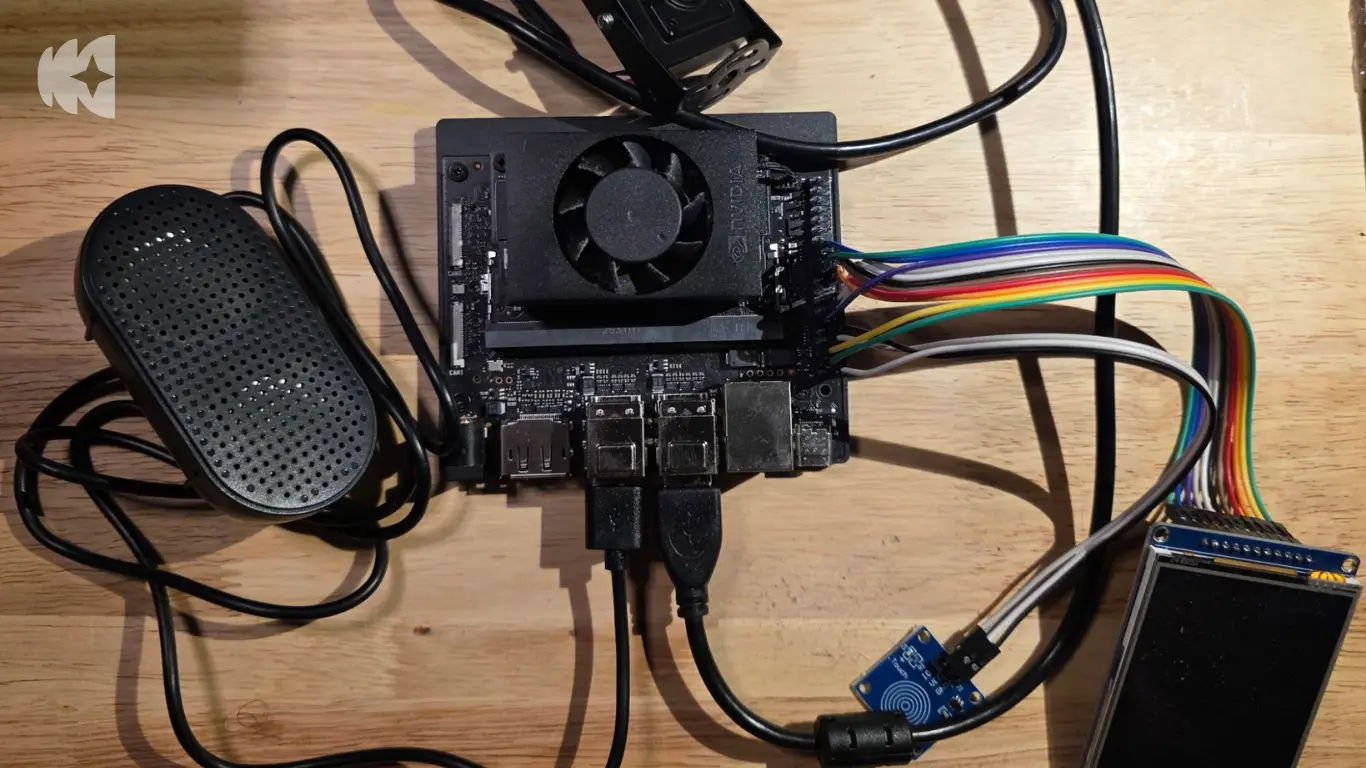
Suno Sutra is an open-source, multilingual handheld AI reference design, unveiled at the India AI Impact Summit in February 2026. The device can describe its surroundings through text or audio across 22 Indic languages. It runs its AI models locally, so it can work without an internet connection. Its code, hardware designs, and development instructions are publicly available, giving builders a starting point for an application or a device shaped around a particular community's needs.
Last June, the VYOMA Innovation Challenge opened with an invitation to make it your own. Organized by Bhashini in collaboration with Current AI, with Kalpa Impact as the knowledge and implementation partner, the challenge invited builders across India to develop applications or reengineer the hardware.
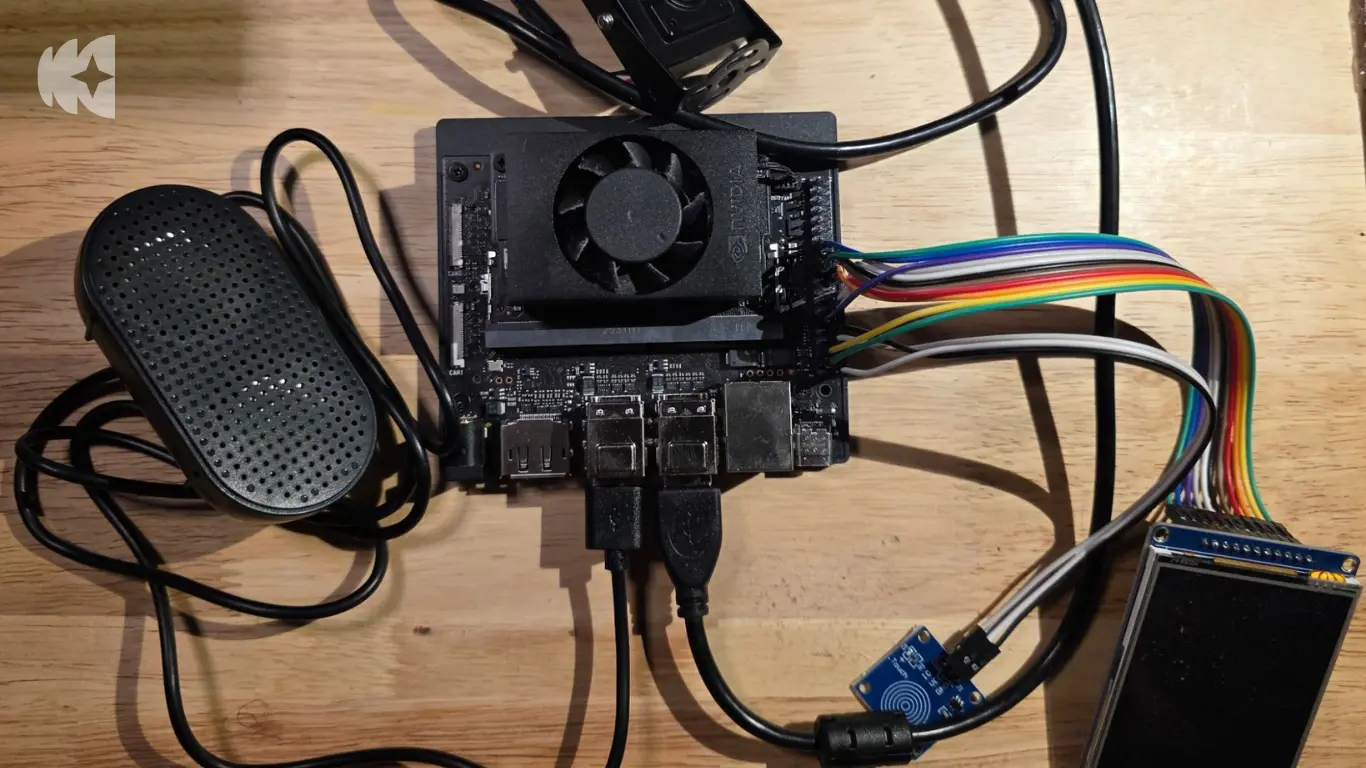
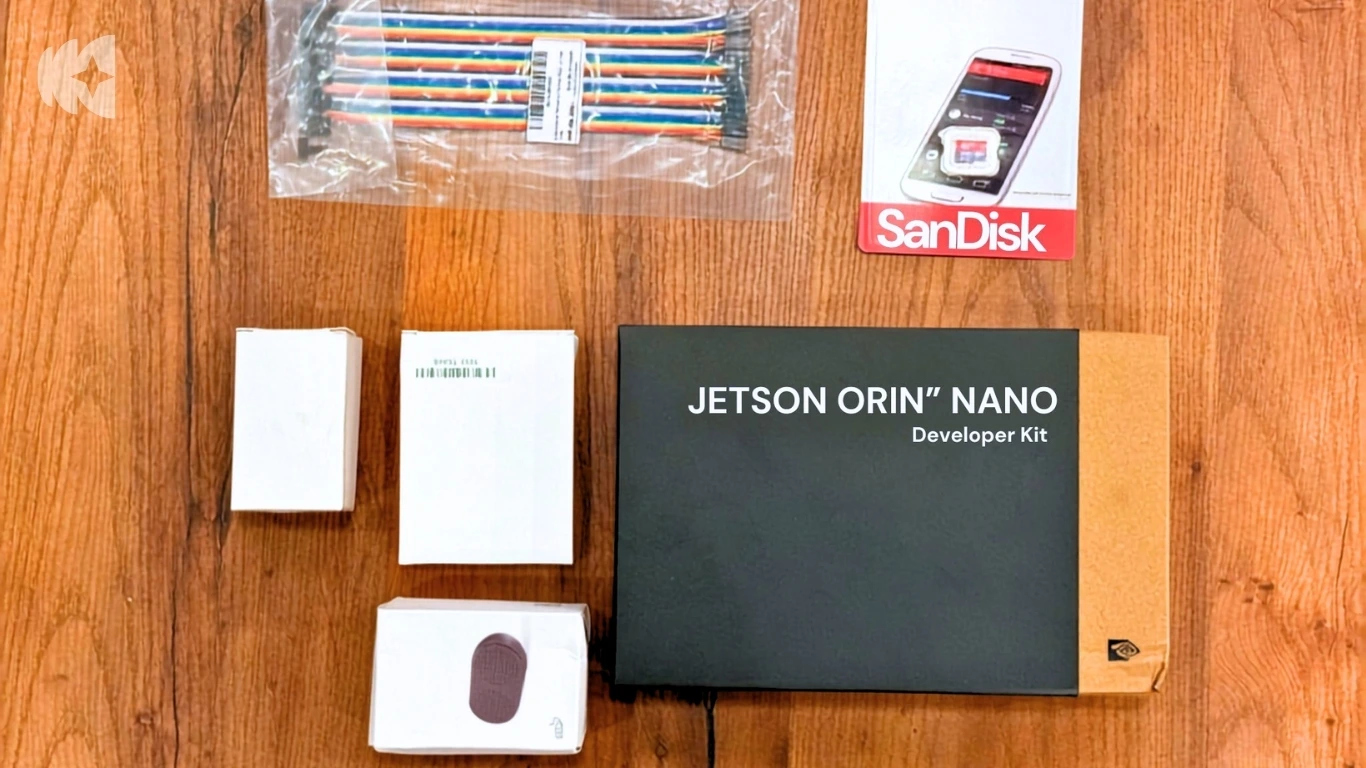
The response brought 135 applications from more than 10 states. 18 teams were selected to receive developer kits, each containing a nano computer, a camera, touchscreen, speaker, storage, and development accessories.
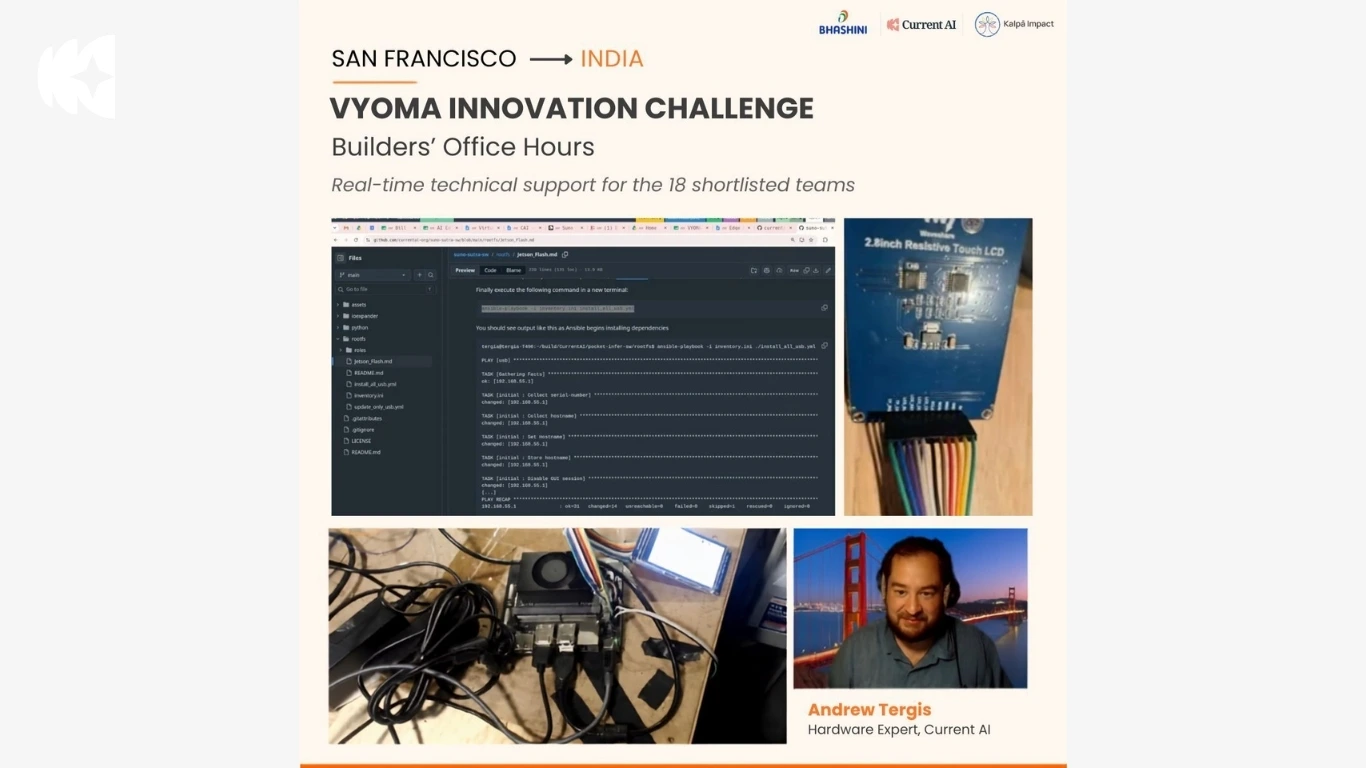
During one builders' session, a team asked how powerful its language model needed to be. Current AI's hardware expert Andrew Tergis explained that memory was limited and recommended a smaller model, adapted to the team's application where possible. The goal was to fit the work onto the device while maintaining the accuracy it needed.
To reach the final showcase, teams had to demonstrate a working prototype, explain who it would help, and present a business plan to produce and support it. The challenge was designed to identify ideas that could become practical, affordable tools for the communities they were built to serve.
Ten of the 18 shortlisted teams reached the final showcase. On September 15, 2026, they demonstrated their working prototypes at Indraprastha Institute of Information Technology Delhi (IIIT-Delhi). They presented to a jury chaired by Bhashini chief executive officer Amitabh Nag, alongside Tarun Pandey of the Ministry of Electronics and Information Technology and Kalpa Impact founder and chief executive officer Sushant Kumar.
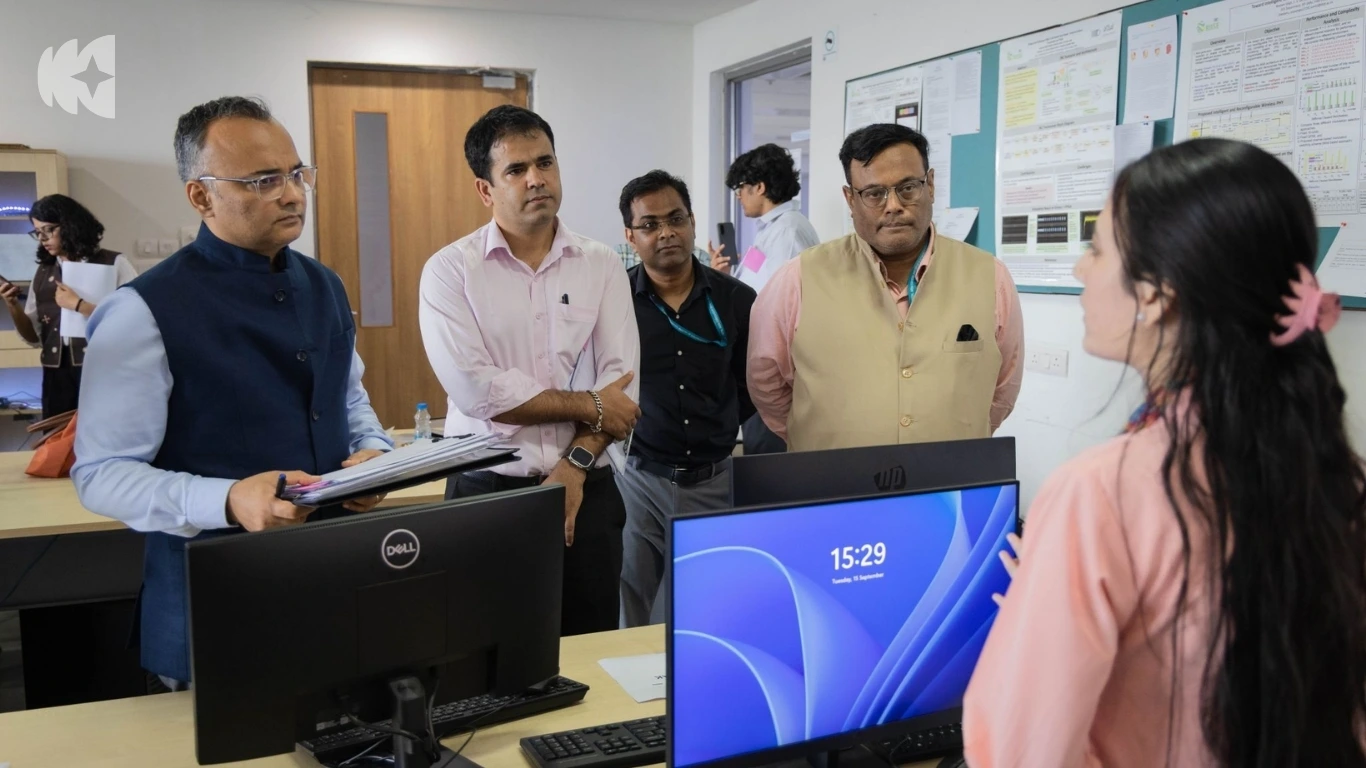
Four teams were named winners, each receiving one million Indian rupees to take their ideas forward, with an opportunity to participate in government-supported deployments.
Meet the VYOMA Challenge winners
ASHA Sahayak helps community health workers answer maternal and child health questions.
Where you live shouldn't dictate the quality of care you receive. In rural India, limited access to health information can leave pregnant women without guidance on nutrition, iron and folic acid supplements, or warning signs that need medical attention. India's Accredited Social Health Activists (ASHAs) are trained women from local communities who help families understand health information and access care, including during pregnancy and after a baby is born. They often work with weak connectivity and heavy workloads.
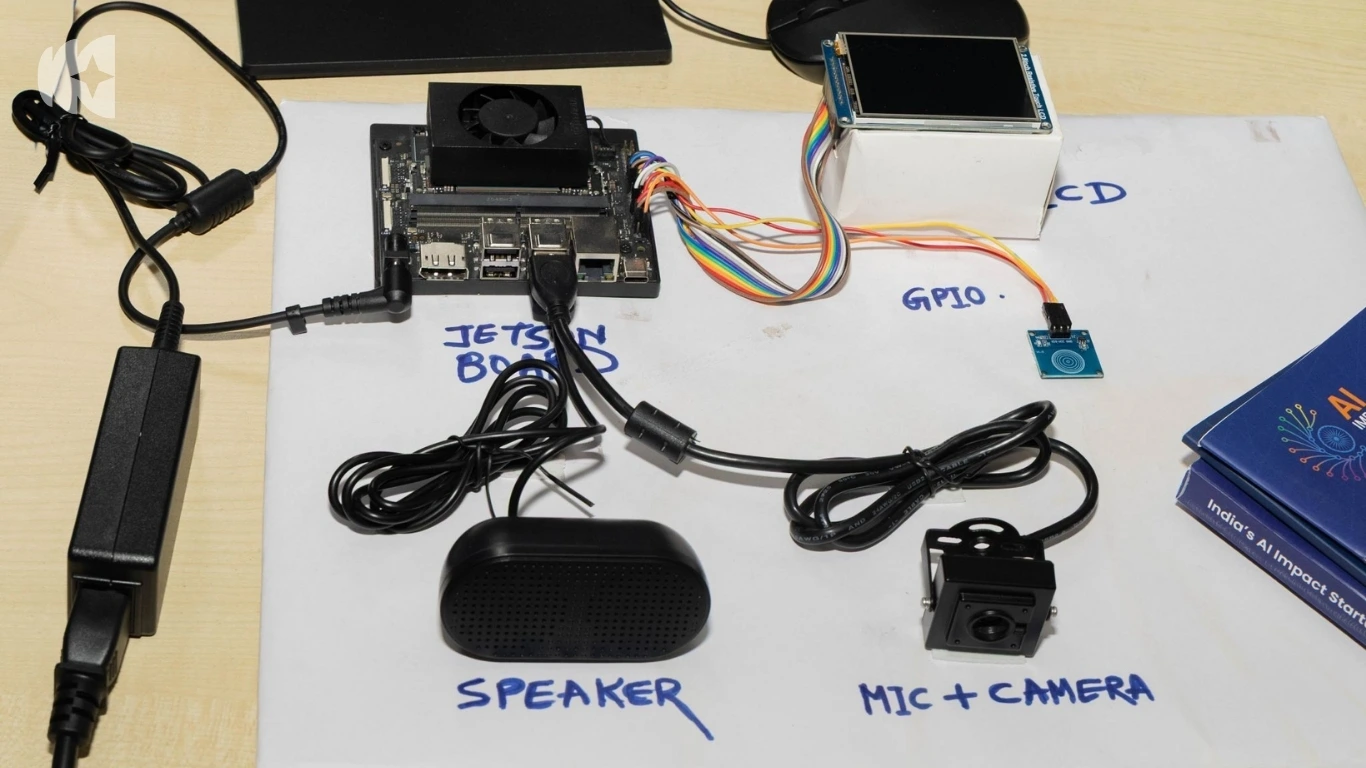
Sueb Sabugar and his team at EFFESS Services, a software business, built ASHA Sahayak to help workers consult maternal and child health guidance through conversation. A worker asks a question in her own language or dialect and hears an answer in the same language, drawn from government health materials, including those of the Indian Council of Medical Research and the National Health Mission. The assistant works offline, helping a worker consult guidance when a mother needs an answer, even where connectivity is limited.
Apna Saathi helps rural households understand and use the information they need.
Plug in Apna Saathi, and it asks, on screen and aloud, which of nine languages you prefer. Hold a button to ask about a pension or government benefit, or show the camera an unfamiliar document and ask, "Yeh kya hai?" or "What is this?" The device reads and explains the information in your language.
.webp)
Its uses reach into everyday situations. A farmer can ask about crop insurance or relief, a family can understand a hospital discharge summary, and a parent and teacher who speak different languages can use it to translate their conversation. Everything runs on the device, without an internet connection, smartphone, or account, and the conversation stays private.
The team also designed limits into its answers. Ask how many tablets to give a child, and it directs you to a doctor. Making information accessible also means recognizing when a person needs professional help.
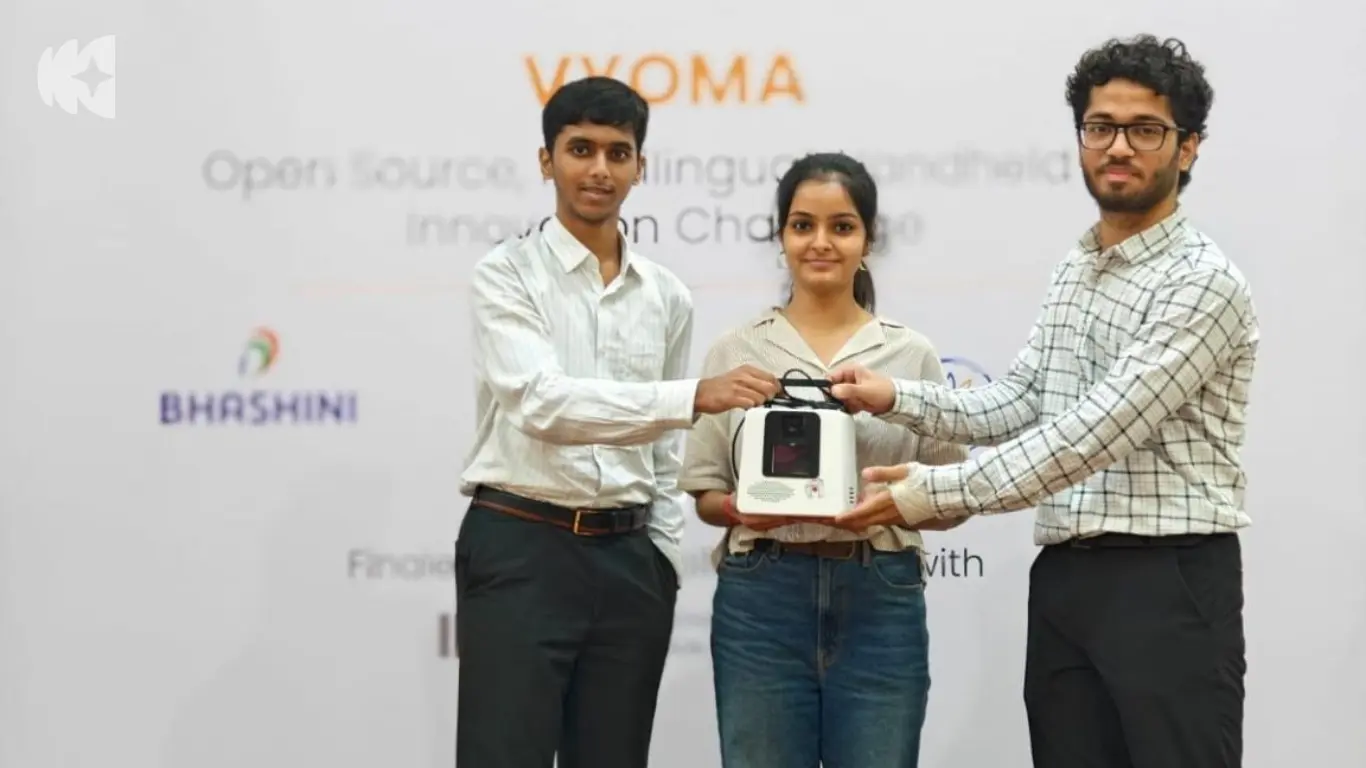
Akansha Mishra began Apna Saathi as a solo project. After being shortlisted, she brought together Team Sangrah, with Saksham Chopra designing and building the enclosure. In two weeks, they turned the idea into a working device that could answer spoken questions, explain documents, and translate conversations without an internet connection. That prototype became one of the VYOMA Innovation Challenge’s four winners.
Shravan supports older people who want to live independently.
For an older person living alone, managing medication and reaching someone in an emergency can be essential to staying independent. Shravan is designed to make those tasks easier through spoken interaction and a few physical buttons.
Say "Shravan" and the device wakes up. Show a prescription to its camera to create a medication record, or hold up a medicine for help identifying it. Spoken reminders prompt users when medication is due and let them acknowledge the reminder. An emergency button can send an alert to a linked radio receiver, creating a way to reach local support without relying on a mobile network. The speech processing and artificial intelligence run on the device itself.
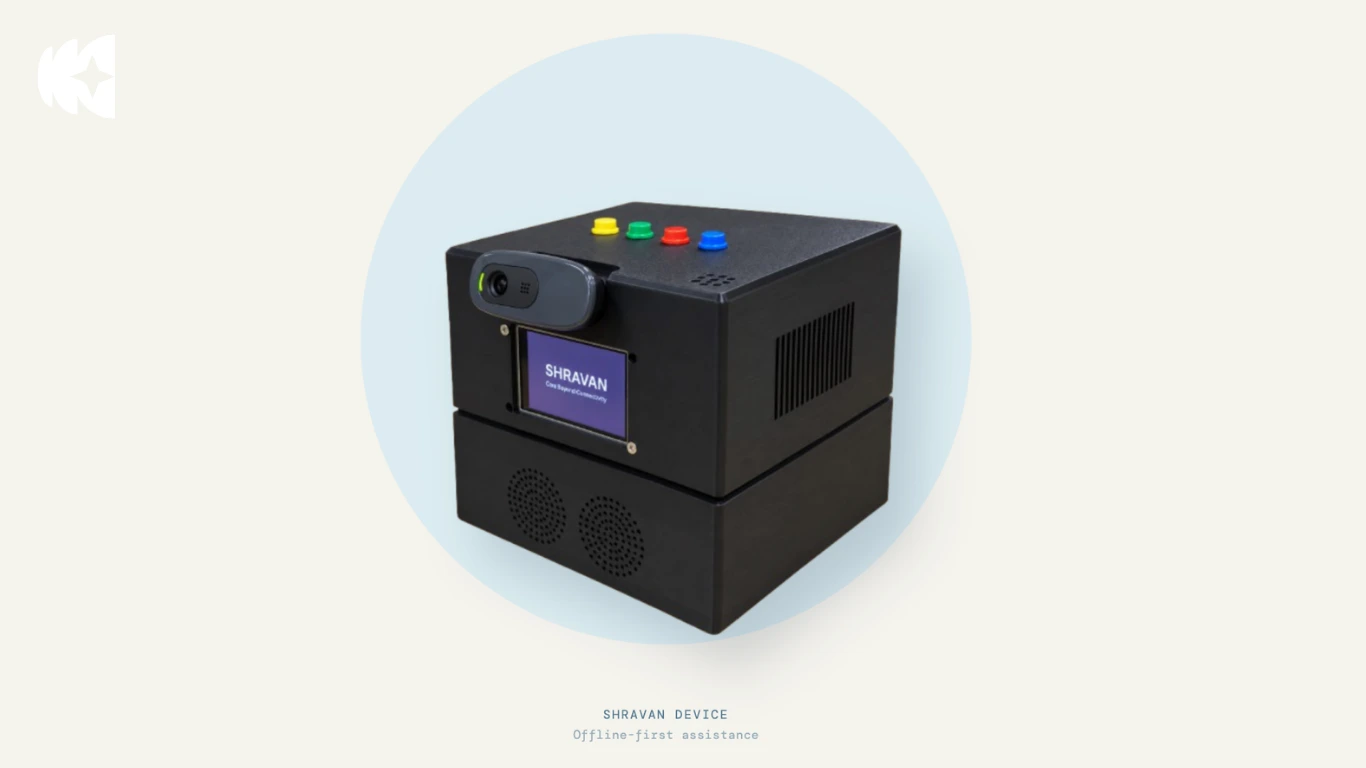
Led by Vamshikrishna V Bidari and mentored by Professor Deepu Vijayasenan, the team from the National Institute of Technology Karnataka turned these ideas into a working prototype. In their LinkedIn posts, team members describe learning through experimentation, breaking things, and fixing them, with technical support from the challenge partners.
The team is now seeking partners to test Shravan in real homes and learn how it fits into the lives of older people, their families, and caregivers.
A.V.E.R.A helps frontline workers assess symptoms and decide what to do next.
When a community health worker encounters a rash or wound, she needs guidance relevant to the patient in front of her. Team Sahyak Mitra, led by Dharun Thandesh, built the Autonomous Voice-Enabled Edge Rural Advisor (A.V.E.R.A) to support these decisions where connectivity is poor.
A worker can describe symptoms aloud or photograph a visible concern. The device consults an offline collection of health protocols and responds in her language, using green, yellow, or red flags to support assessment. When confidence is low, it directs her to refer the patient to a primary health center. It is designed for ASHAs and auxiliary nurse-midwives who need to consult guidance during a visit.
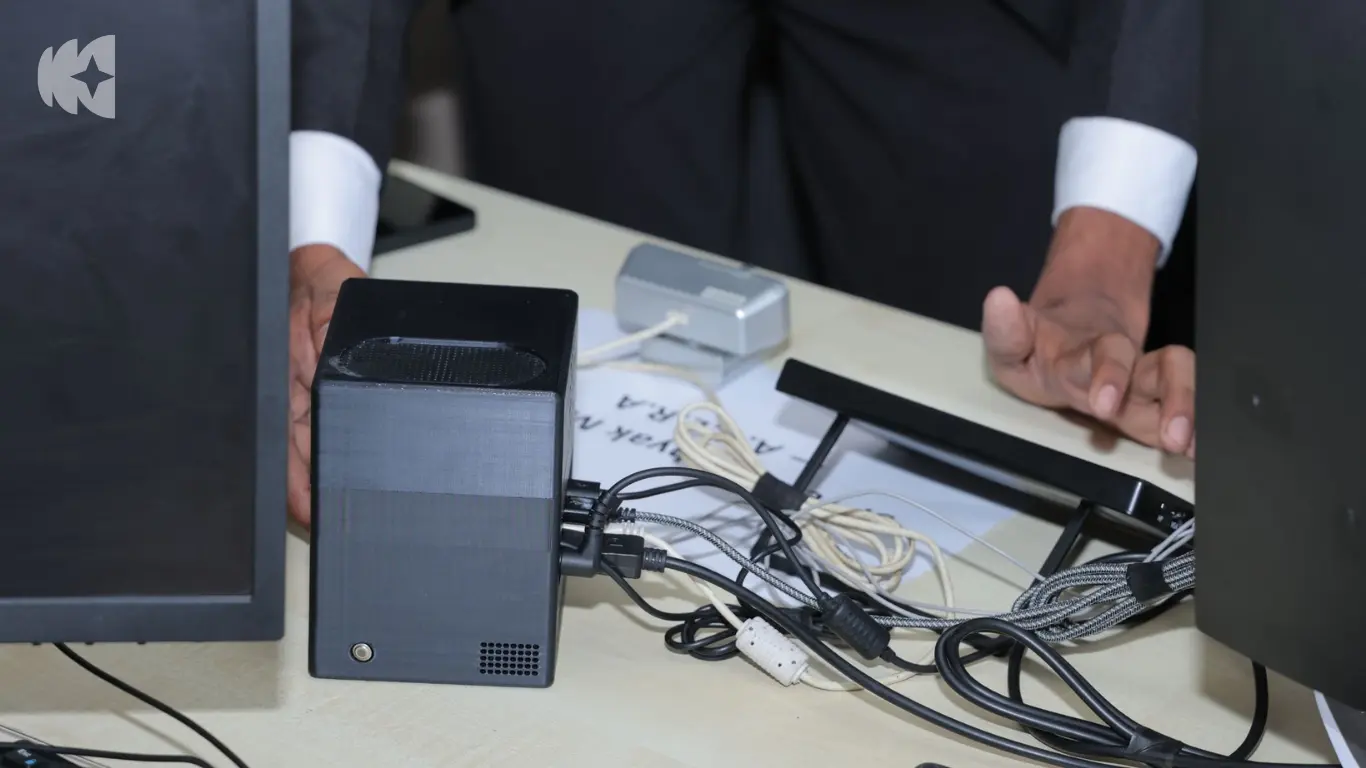
Getting the prototype to that point took two months of learning and troubleshooting. In a LinkedIn post about the challenge, team member Kishor Kumar recalled working past midnight through hardware failures, software crashes, and models that would not run, with problems appearing even shortly before the final presentation.The computing platform was new to the team when they started. They went on to demonstrate their work in Delhi and become one of VYOMA's four winners.
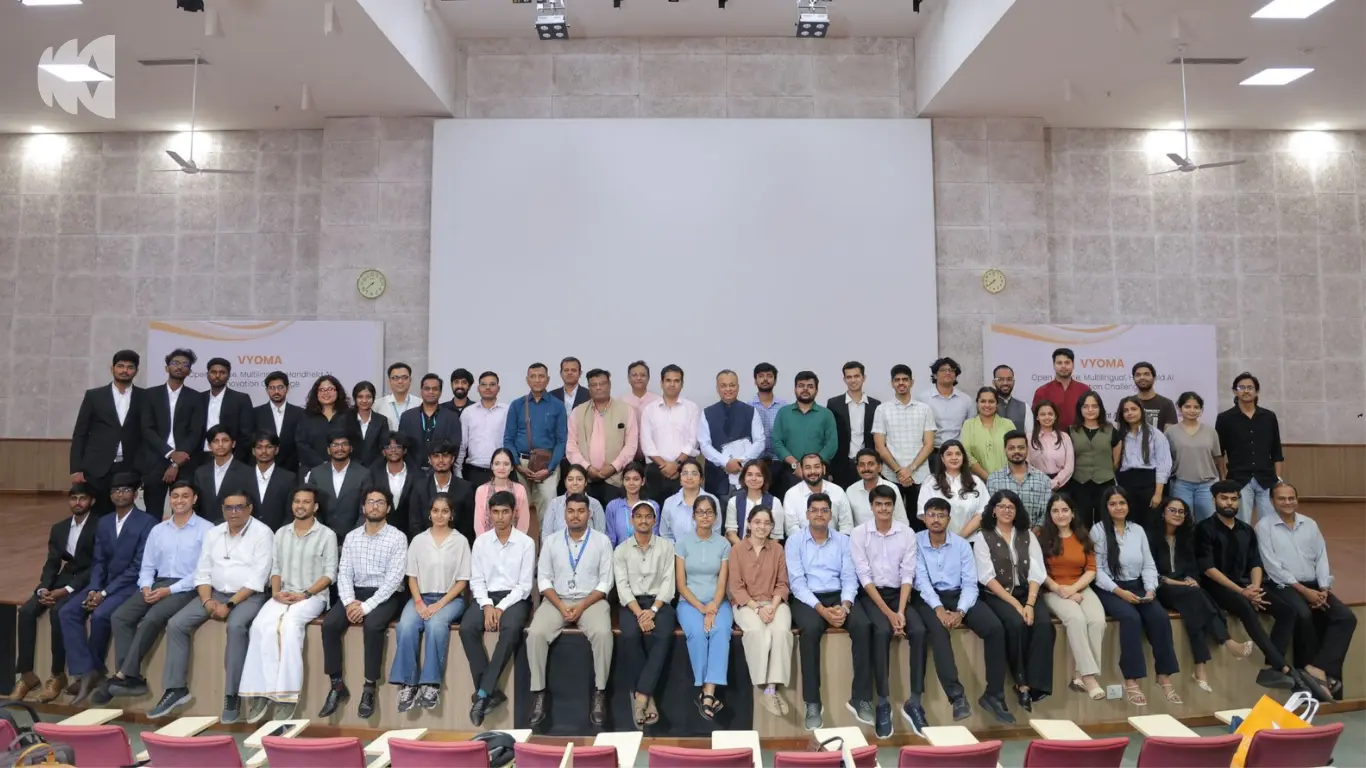
We are grateful to Bhashini, Kalpa Impact, the mentors and jury, and IIIT-Delhi for helping these builders turn an open design into working prototypes.
Behind the devices at the finale were people assembling teams, learning unfamiliar hardware, and working through failures late into the night. Public code gave them something to build on, while equipment and mentorship helped them put their ideas to the test. They could choose whose problem to address, which language a device should speak, and how it should work when the internet was unavailable.
That freedom is central to the local, sovereign AI future we are building. VYOMA also shows the approach behind AI Potluck, where people contribute their skills, tools, knowledge, and resources so others can build on them. We invite builders, funders, public institutions, and community partners to bring what they can, helping more people shape AI around their lives and make it their own.