
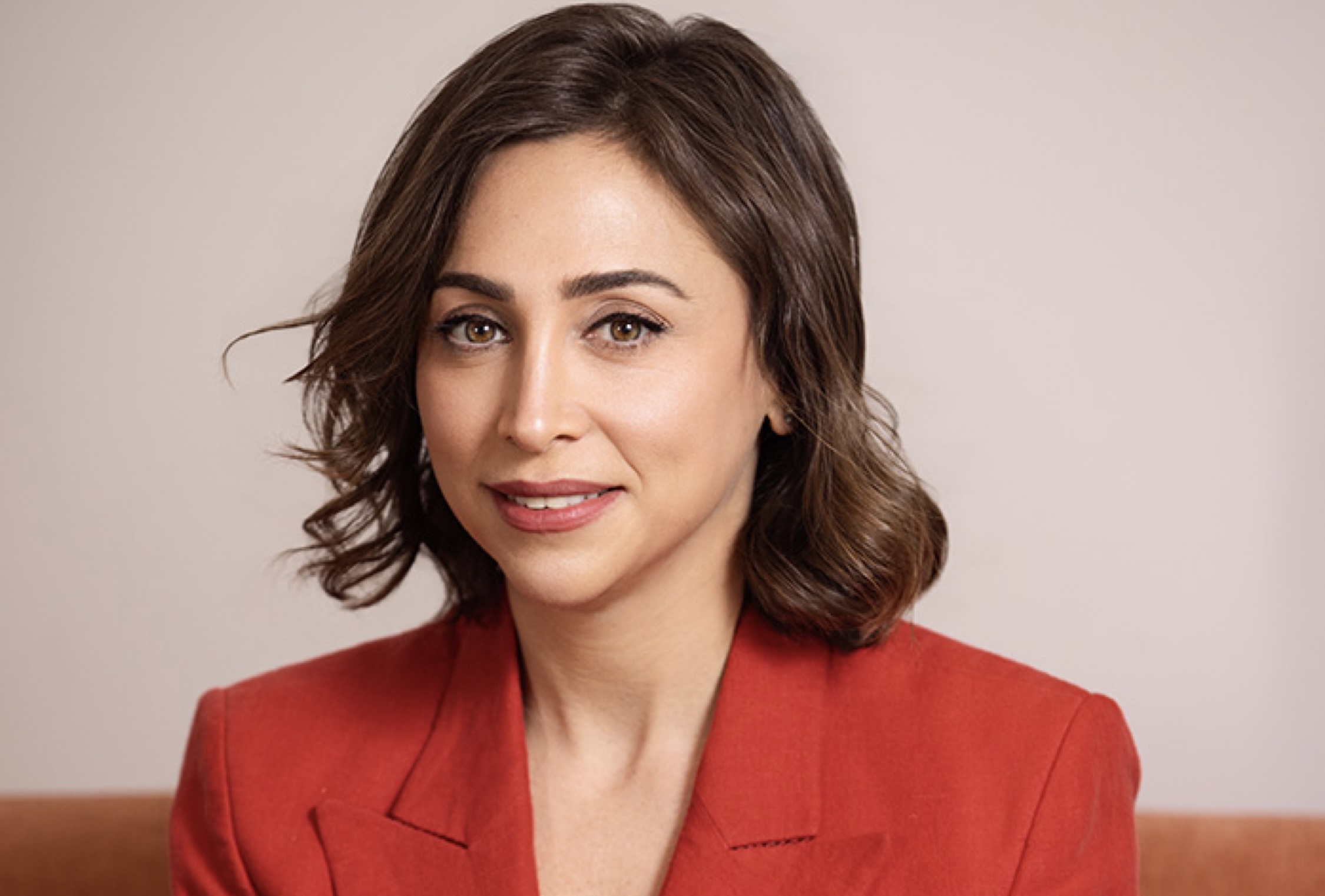

I'm Ayah Bdeir, and today I'm thrilled to be joining Current AI as CEO.
At the risk of sounding cliché, my entire career feels like it has led me to this moment. Let me explain.
Technology underpins every aspect of our culture and society. That belief has guided my career: breaking down barriers between people and technology. Today, there is an incredible global energy and talent focused on AI. We have a rare opportunity to direct that energy towards the public interest, and at Current AI, to do so at the scale the public interest demands.
My journey to date
I’ve long believed building technology is inseparable from thinking about society and culture. As an undergrad at the American University of Beirut, I paired a Sociology degree with Engineering. As a graduate student, I was part of Computing Culture at the MIT Media Lab, a research group that built technology to critically examine the reciprocal impacts between technology and society. Later, at NYU, I taught a course I created called Technology as Identity.
My work in open source began with the rise of smartphones and the Internet of Things. After graduating from the MIT Media Lab, I became a Creative Commons fellow, helped co-found the open hardware movement and co-authored the first Open Source Hardware Definition — leading to the Open Hardware Association and the CERN Open Hardware Licence, now used on millions of products worldwide.
I then turned to education technology, founding littleBits to help kids create technology, not just consume it. Called by Bloomberg “LEGO for the iPad generation,” littleBits reached millions of children, advancing an open, gender-neutral vision of STEM centred on kids as inventors. So much so that our mantra was “we invent the world we want to live in.” (we even put it on a Times Square billboard!)
When I sold the company in 2019, I turned my attention to AI, the biggest technology wave reshaping our lives, spending the last several years at Mozilla leading its reinvention for the AI era, and developing its open source AI strategy.
Why I joined Current AI
If AI is the transformative revolution we perceive it to be, it needs to serve the public interest today and tomorrow, not in some future of AGI. Technology mirrors those who create it, which means AI must be accessible to everyone.
Access means three things: technology is understandable (and more importantly auditable), it is available (for reasonable effort or cost), and most importantly, it is creatable (while you retain agency and ownership). In other words, you have the ability to build what you want, when you want, for your people.
At Current AI, my goal is to help build a collaborative, collective, and global vision for AI, not one governed by a specific country or a company. In short: to catalyse a global public interest AI movement.
From initiatives to a movement
Around the world, builders and researchers are developing public interest AI building blocks (datasets, models, compute, audits and applications), but efforts are not always co-ordinated or additive. Meanwhile, technology companies are vertically integrated by design, investing heavily in co-ordination and collaboration to advance a unified mission.
The public interest AI ecosystem lacks an independent, global space to nurture decentralised initiatives across the AI value chain. As a result, the benefits of scale and collaboration are often not accruing to the community doing this work. Current AI exists to change that by dedicating ourselves to building a truly open, accessible, and global AI system focused on the public interest.
To have a genuine shot at being an alternative, we must harness the full breadth of work happening across open source and public interest AI. That means helping transform individual, decentralised initiatives into a coherent Public Interest AI Movement. This is the core of our mission.
How we'll build
To do this, we're going to build alongside the community. Our output will not be research or policy papers, but actual open and auditable technology. To do this, we are drawing from three ecosystems:
- Open source, for its values of openness, transparency, and collaboration
- Startups, for their agility, speed, and focus on real users
- The public interest and philanthropic ecosystem, for their commitment to impact and societal benefit
Our vision requires AI systems to be auditable, understandable, inspectable, and verifiable — not only by regulators or researchers, but by communities impacted by them. Auditability is a condition for trust to shift AI from a black box into something legible and participatory, whether in healthcare, public services, or multilingual applications.
To do this, we will build a different kind of non-profit: transparent by default, agile in execution, built from the ground up on open source AI methodology, and most importantly, close to the work — meaning both the builders and the use cases.
We view our team as not just the internal team but the entire public interest and open source AI ecosystem. Our role is to help that community collaborate and to unblock it where we can through funding, investment in infrastructure and tools, or by connecting people together.
Join us
Current AI is a first-of-its-kind global public-private partnership that brings together governments, foundations, and the private sector to build public interest AI at scale. Launched at the AI Action Summit in Paris in 2025, the organisation has already raised hundreds of millions through partnerships with the French government, AI Collaborative, and other leading governments, philanthropic, and industry partners.
As I join the team, I'd like to thank our Interim Committee, our Founder and Chair Martin Tisné, and all of our partners and supporters.
In the weeks ahead, I'll share more about our strategy and priorities. For now, a call to you: if this vision inspires you, please get in touch.
We're looking for team members, partners, and collaborators.
—Ayah