
We fund what the market won't.
Many crucial initiatives will never be profitable enough for commercial players to build. While cultural preservation work can determine whether AI erases human diversity or helps preserve it, it's also what Big Tech is structured to ignore.
Current AI's granting program exists to make sure this essential work happens, while leveling up the entire public-interest AI ecosystem.
Our Granting Program
We distribute funds through grants for a few strategic reasons. First, we want our support to galvanize coordination and collaboration, not competition. Grantmaking lets us require open documentation and cross-pollination as conditions of funding, ensuring the work we support builds collective momentum and grows the public-goods ecosystem.
Grantmaking (as opposed to equity funding) also protects communities’ control over their own cultural knowledge, data, and the models built from it. And, it lets us judge success by how well a grantee helps the movement grow and evolve collectively, through both direct successes, and through challenges seen as learning opportunities.
Lastly, grantmaking lets us multiply funding. By bringing public and private funders together around the same table, we’re able to make a larger investment than any one funder could commit alone.

What we fund
Common, shared tools that function as AI public goods (think datasets, models, compute, audits, applications, and documentation)
Community-owned infrastructure with participatory governance
Products that reach end users with a clear impact
Resourceful, low-cost solutions that work despite limited electricity, capital, and connectivity
Projects that produce innovations that become usable across the whole AI value chain
What we don't fund
Closed or proprietary systems, or architectures that create vendor lock-in
Extractive data practices without community ownership
Work that can't demonstrate a commitment to auditability and transparency
Research papers or policy briefs without an auditable technical work product
Efforts with no cross-pollination potential or learning for the broader movement
Cultural Preservation
To focus our work and create optimal conditions for cross-pollination among grantees, this year we’re introducing our inaugural funding theme: Cultural Preservation.
While linguistic diversity in AI has begun to gain traction, the oral traditions, knowledge systems, spiritual practices, social structures, and lived epistemologies that give language its meaning remain almost entirely absent from how AI is trained, governed, and deployed. Much of this knowledge was never digitized. It lives in manuscripts, local media, embodied life, and living memory, and is invisible to AI by default.
The result is AI that reflects only some of the world's knowledge, and almost none of its diversity.
We believe that by embedding ethical and community-first practices into the AI stack, and by investing in shared, open-source infrastructure, our technologies can reflect the full richness of our world’s many cultures.
For 2026, we have committed over €9M to deploy across two rounds of Cultural Preservation grantees.
Who we fund
Our grantmaking program supports builders developing open and auditable technology, not research, policy, or regulation work.
Rather than funding individual proposals in silos, we build cohorts of organizations that can cross-pollinate and lift each other up. We review all applications with the full cohort in mind, aiming for diversity across cultures, geographies, and stages of growth.
Typical 2026 grants range between €100k and €500k, with projects that can become open hubs, frameworks, or platforms to build on receiving larger grants. Note that we encourage applications from builders and nonprofits located in regions that have typically been excluded from AI’s development.
What we look for
Ecosystem impact
We look for teams who value sharing, connecting, and contributing to the broader field, across regions and additional sectors.
Openness
Ideally a dataset, model, tool, or documented methodology will be contributed to the commons. (Note that “open source” does not mean surrendering community ownership. We value data sovereignty and the right of communities to determine how their knowledge is shared and used.)
Frugal AI
We appreciate solutions that work under real-world constraints. This is central to what public-interest AI means in practice, not what it means in a well-resourced lab.

Let’s Build Together
Working collaboratively, we build to fill in gaps in the public-interest AI ecosystem, with everything designed to be open, accessible, and auditable.
Latest Updates & Initiatives
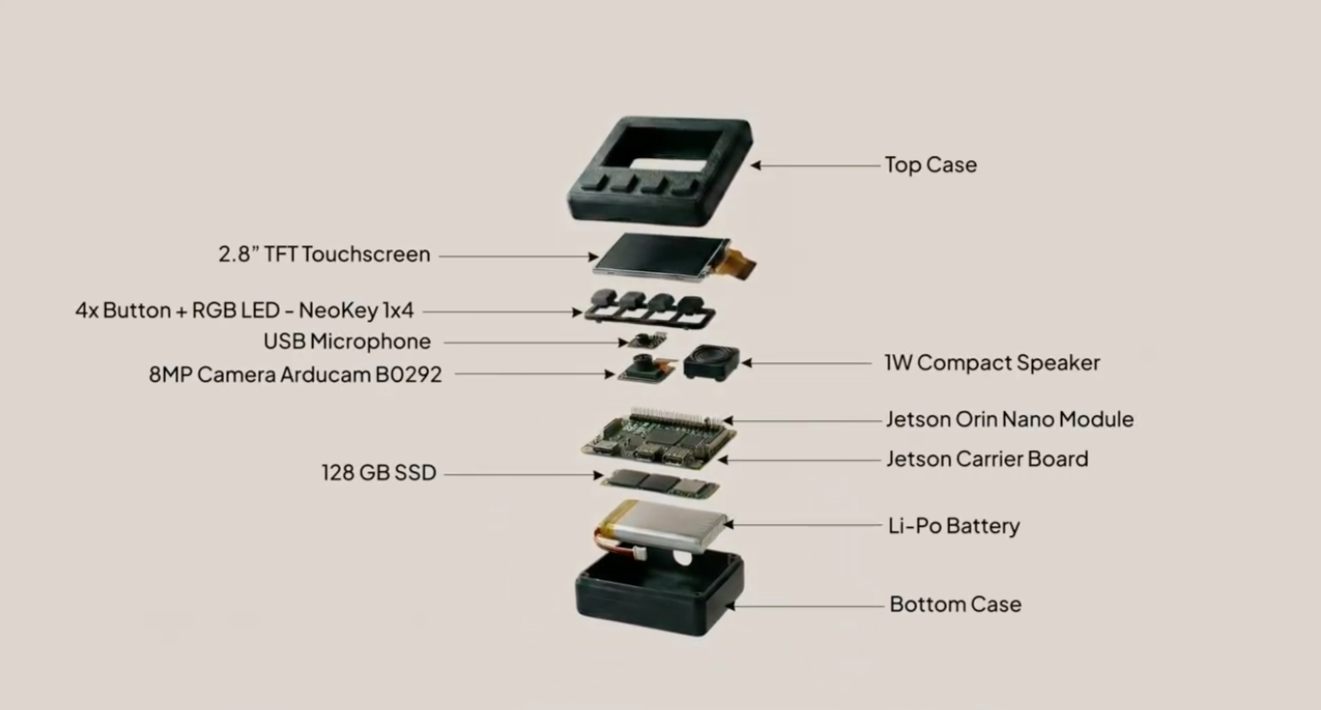
Bâtir une IA pour un milliard de personnes – Présentation du Challenge d’innovation VYOMA
Nous dévoilons aujourd’hui le Challenge d’innovation VYOMA, un concours dédié à l’IA multilingue, portable et open source. Il s’adresse aux hackers hardware et software, aux inventeurs, aux linguistes et aux chercheurs basés en Inde, afin qu’ils développent, modifient et réinventent ce que cet appareil devrait être.
Join the movement
Working collaboratively, we build to fill in gaps in the public-interest AI ecosystem, with everything designed to be open, accessible, and auditable.